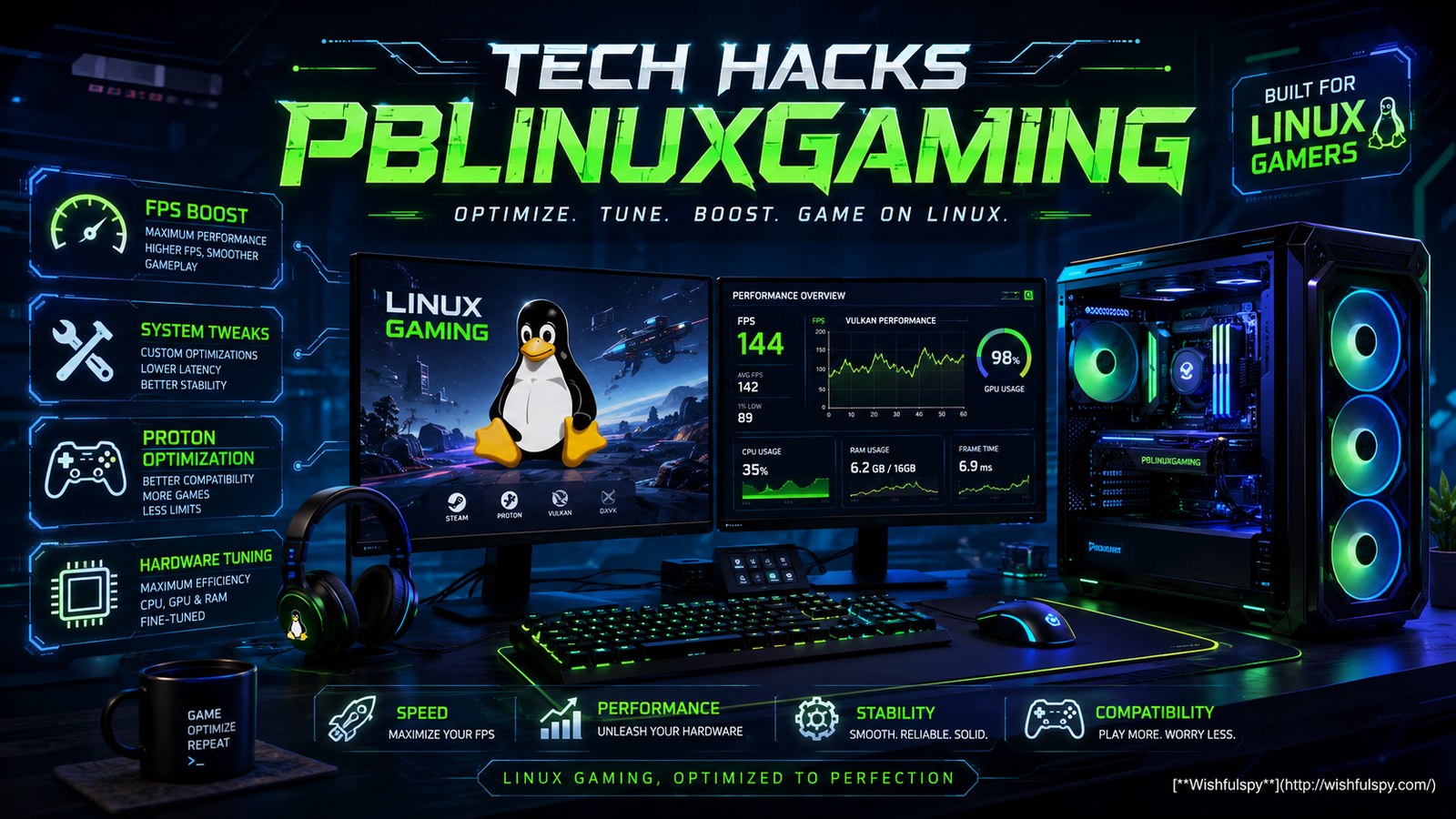
Tech Hacks PBLinuxGaming: Complete Guide to Linux Gaming Optimization
Tech Hacks PBLinuxGaming represents a modern approach to improving gaming performance on Linux systems through smart optimization, compatibility tuning, and system-level performance adjustments. As Linux gaming continues to grow in 2026, more players are shifting away from traditional setups and exploring Linux as a serious gaming platform. This shift is driven by better driver support, advanced compatibility layers, and tools that make Windows games playable with strong performance.
The main idea behind Tech Hacks PBLinuxGaming is not just running games on Linux, but running them efficiently. This includes improving frame rates, reducing lag, and ensuring stable performance even in demanding AAA titles. By understanding how Linux interacts with hardware and game engines, users can unlock a smoother and more responsive gaming experience.
Understanding Tech Hacks PBLinuxGaming
Tech Hacks PBLinuxGaming focuses on practical optimization techniques that improve how games run on Linux-based systems. It is built around the idea of controlling system resources more effectively so that games receive priority over background processes. Unlike traditional operating systems where gaming performance is often locked behind fixed settings, Linux allows deeper customization.
This approach includes tuning system behavior, adjusting graphics pipelines, and optimizing compatibility layers that translate Windows games into Linux-friendly formats. The goal is to reduce overhead and increase efficiency so that even mid-range hardware can deliver stable performance in modern games.
Evolution of Linux Gaming Ecosystem
Linux gaming has evolved significantly over the past decade, moving from limited support to a fully functional gaming ecosystem. In earlier years, Linux users relied heavily on native ports, which were rare and often under-optimized. Today, technologies like Proton have transformed the gaming landscape by allowing thousands of Windows titles to run smoothly on Linux.
This evolution has been supported by major industry contributions, including Valve’s investment in Steam Play and open-source improvements in graphics drivers. As a result, Linux is no longer considered a secondary gaming platform. Instead, it has become a flexible environment where performance tuning and customization are more accessible than on many other systems.
System Requirements and Hardware Optimization
Hardware plays a crucial role in Tech Hacks PBLinuxGaming because Linux performance is closely tied to how well the system interacts with drivers and system resources. A balanced CPU and GPU combination ensures that games run without bottlenecks. Memory speed and storage type also influence loading times and overall responsiveness.
Optimizing hardware on Linux involves more than just meeting minimum requirements. It requires ensuring that drivers are properly installed and that the system is configured to prioritize performance over energy saving. Solid-state drives improve asset streaming, while modern GPUs with Vulkan support provide smoother rendering and reduced latency in demanding games.
Linux Distributions for Gaming Performance
Choosing the right Linux distribution is an important step in achieving optimal gaming performance. While many distributions can run games, some are better suited for gaming due to better driver integration and system efficiency. Ubuntu-based systems are often preferred for their stability and wide compatibility, while Arch-based systems appeal to users who want cutting-edge updates.
Gaming-focused distributions often come pre-configured with performance tools and updated graphics drivers. This reduces setup time and ensures that users can start gaming with minimal adjustments. The choice of distribution directly affects how smoothly games run and how easily optimization techniques can be applied.
Proton and Wine Compatibility Layer Optimization
Proton and Wine are essential components of Tech Hacks PBLinuxGaming because they allow Windows games to run on Linux systems. These compatibility layers translate system calls and graphics instructions into formats that Linux can understand. Proton, in particular, has become a major breakthrough for Linux gaming through its integration with Steam.
Optimization of these layers involves selecting the right Proton version for each game and adjusting compatibility settings for better stability. Some games require specific configurations to avoid crashes or graphical glitches. With proper tuning, Proton can deliver performance that is nearly identical to native Windows gameplay in many cases.
Graphics Drivers and Vulkan Performance Tuning
Graphics drivers are one of the most important factors in Linux gaming performance. NVIDIA and AMD both provide drivers that support modern gaming requirements, but their performance depends heavily on proper installation and configuration. Vulkan plays a key role here as it provides a low-level graphics API that reduces CPU overhead and improves rendering efficiency.
When Vulkan is properly implemented, games benefit from smoother frame rates and reduced input lag. This is especially noticeable in open-world and high-action titles. Keeping drivers updated ensures compatibility with the latest game engines and improves stability across different hardware configurations.
Kernel Tweaks and System Responsiveness
The Linux kernel is at the core of system performance, and small adjustments can significantly improve gaming responsiveness. Performance-focused kernels or low-latency configurations help reduce input delay and improve frame pacing during gameplay. These tweaks ensure that system resources are allocated efficiently when running demanding games.
CPU scheduling also plays an important role in responsiveness. By prioritizing gaming processes, the system can reduce background interference and maintain stable performance. Memory management improvements further enhance gameplay by ensuring that assets are loaded quickly and efficiently without unnecessary delays.
Reducing Lag, Stutter, and Frame Drops
One of the biggest challenges in Linux gaming is eliminating lag and stuttering. These issues often occur due to shader compilation, inefficient caching, or improper system configuration. Tech Hacks PBLinuxGaming addresses these problems by improving how shaders are pre-compiled and stored, reducing runtime delays during gameplay.
Frame drops can also be caused by background processes or insufficient hardware optimization. By minimizing unnecessary system activity and ensuring proper GPU utilization, users can achieve more consistent frame rates. This leads to smoother gameplay, especially in fast-paced competitive environments where stability is critical.
Future of Linux Gaming and Optimization Techniques
The future of Tech Hacks PBLinuxGaming is closely tied to advancements in open-source development and gaming industry support for Linux. As more developers embrace cross-platform design, compatibility will continue to improve, reducing the need for complex manual optimization.
At the same time, new tools and automation systems are expected to simplify performance tuning. However, advanced users will still benefit from deeper control over their systems. Linux gaming is moving toward a future where high performance, flexibility, and accessibility exist together, making it a strong alternative for serious gamers.
Conclusion
Tech Hacks PBLinuxGaming represents a powerful approach to maximizing gaming performance on Linux systems through smart optimization and system control. By understanding hardware behavior, using compatibility layers effectively, and applying kernel and driver improvements, users can significantly enhance their gaming experience.
As Linux gaming continues to evolve, optimization techniques will remain an important part of achieving peak performance. With the right setup and understanding, Linux can deliver a smooth, stable, and highly customizable gaming environment that rivals traditional platforms.
