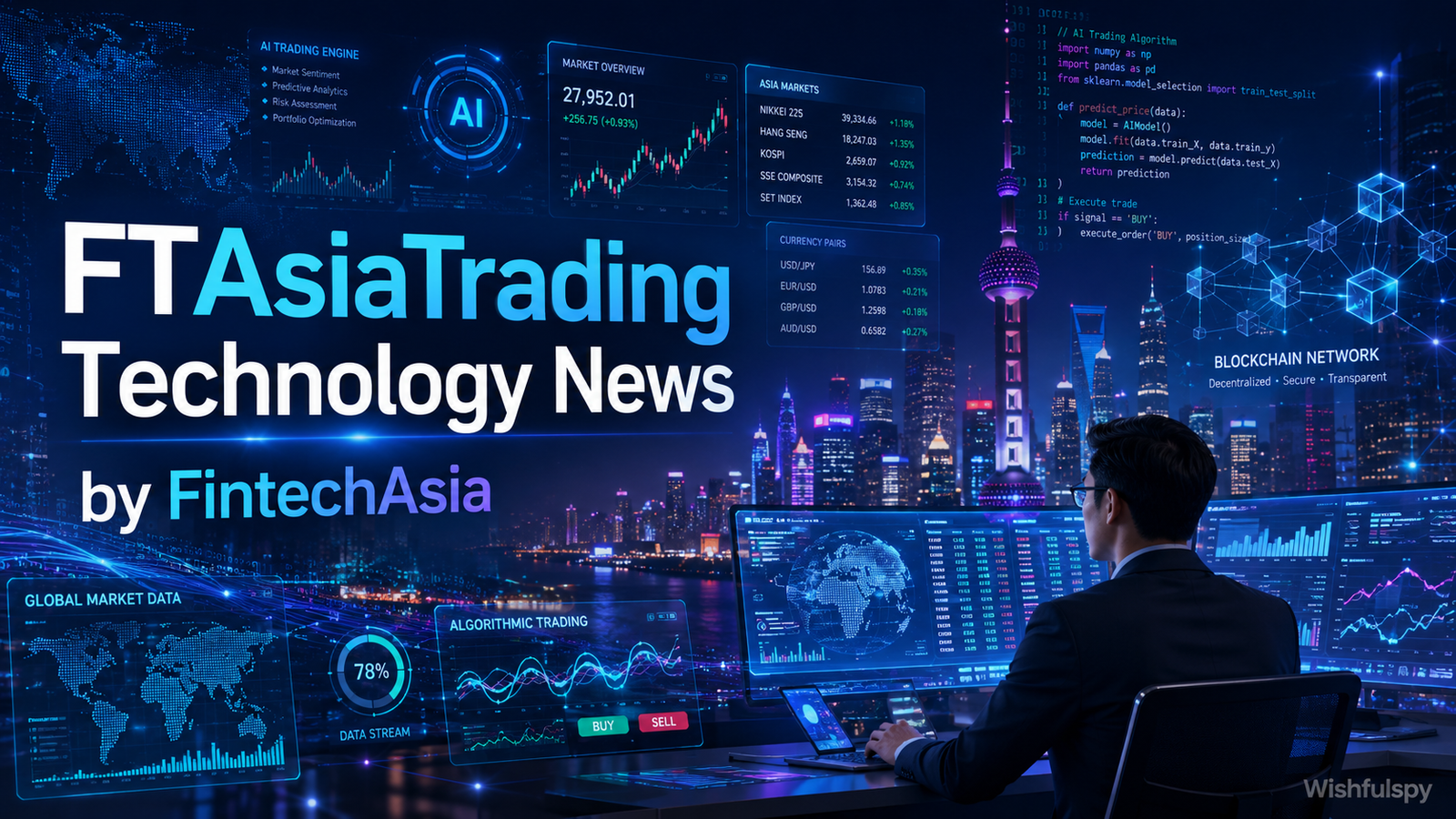
FTAsiaTrading Technology News by FintechAsia: A Deep Insight into Asia’s Evolving Fintech Trading Ecosystem
Introduction to FTAsiaTrading Technology News by FintechAsia
FTAsiaTrading Technology News by FintechAsia represents one of the most discussed topics in modern fintech journalism, especially in the Asian financial technology landscape. It focuses on how advanced trading systems are transforming traditional financial markets into fully digital, automated, and intelligence-driven ecosystems. The coverage includes everything from algorithmic trading innovations to blockchain settlement systems and AI-powered market prediction tools.
In today’s fast-moving financial environment, information is not just power but also timing. FTAsiaTrading Technology News emphasizes this reality by reporting how milliseconds can determine trading outcomes in global markets. The platform highlights the integration of advanced technologies that allow traders to analyze massive datasets, execute trades instantly, and manage risk with precision. This makes it an important reference point for both institutional investors and retail traders.
FintechAsia, as a fintech-focused media source, plays a key role in simplifying these advanced topics. It translates complex trading systems into understandable insights, making it easier for audiences to grasp how modern financial ecosystems operate. This combination of news, analysis, and technological breakdowns makes FTAsiaTrading a significant keyword in fintech SEO and financial research discussions.
The Rise of Digital Trading Systems in Asia
Asia has become one of the fastest-growing regions for fintech innovation, and FTAsiaTrading Technology News reflects this transformation. Over the past decade, traditional brokerage systems have been rapidly replaced by digital platforms that rely on automation, cloud computing, and AI-based decision engines.
This shift is not only technological but also structural. Financial institutions in countries like Singapore, Hong Kong, Japan, and South Korea are investing heavily in digital trading infrastructure. FTAsiaTrading represents this transition by showcasing systems that allow seamless cross-border transactions, multi-asset trading, and real-time analytics.
The growth of digital trading in Asia is also driven by increasing retail investor participation. Mobile trading applications and AI-driven financial tools have democratized access to global markets. FintechAsia frequently highlights how this accessibility is reshaping investor behavior, making markets more dynamic and data-driven than ever before.
Artificial Intelligence as the Core of Modern Trading Systems
Artificial intelligence is one of the most important pillars in FTAsiaTrading Technology News coverage. AI systems are now deeply embedded in trading platforms, enabling predictive analytics, automated decision-making, and real-time risk assessment. These systems process millions of data points every second, identifying patterns that human traders cannot easily detect.
Machine learning models within FTAsiaTrading platforms continuously evolve based on historical and real-time data. This adaptive learning process improves trading accuracy over time and helps reduce losses caused by market volatility. It also enables sentiment analysis, where AI scans news, social media, and financial reports to predict market movement trends.
FintechAsia emphasizes that AI is not replacing traders but enhancing their capabilities. Human decision-making is now supported by machine intelligence, creating a hybrid trading model that combines emotional discipline with computational precision. This evolution is reshaping how financial markets operate globally.
Algorithmic Trading and High-Speed Market Execution
Algorithmic trading is a core element of FTAsiaTrading Technology News and one of the most influential innovations in modern finance. These systems execute trades automatically based on predefined mathematical models and market conditions, eliminating emotional bias from trading decisions.
High-frequency trading systems, often integrated within FTAsiaTrading frameworks, operate at extremely high speeds measured in milliseconds or microseconds. These systems analyze market fluctuations and execute orders faster than any human trader could respond. This speed advantage is critical in highly volatile markets where price changes occur instantly.
FintechAsia reports that algorithmic trading is becoming more accessible to smaller investors through fintech platforms. What was once exclusive to hedge funds and large institutions is now available through user-friendly trading applications powered by AI and automation technologies. This democratization is one of the most important shifts in modern financial systems.
Blockchain Technology and Financial Transparency
Blockchain technology is another key pillar in FTAsiaTrading Technology News coverage. It provides a decentralized, transparent, and secure method of recording financial transactions. In trading ecosystems, blockchain eliminates the need for traditional intermediaries, reducing both cost and settlement time.
FTAsiaTrading systems increasingly incorporate blockchain to support tokenized assets and digital securities. These innovations allow real-world assets such as stocks, commodities, and bonds to be represented digitally on distributed ledgers. This improves liquidity and expands investment opportunities across global markets.
FintechAsia also highlights the importance of blockchain in enhancing regulatory compliance. Since every transaction is permanently recorded on the blockchain, auditing becomes easier and more reliable. This transparency is essential in building trust within digital financial ecosystems.
Big Data Analytics and Predictive Market Intelligence
Big data plays a critical role in FTAsiaTrading Technology News because modern financial markets generate enormous amounts of information every second. Trading systems analyze price movements, trading volumes, economic indicators, and global news to generate actionable insights.
Predictive analytics uses this data to forecast potential market trends. FTAsiaTrading platforms rely on complex algorithms that process both structured and unstructured data to identify trading opportunities. These insights help traders make more informed decisions in real time.
FintechAsia emphasizes that data-driven trading is now the foundation of modern financial strategy. Instead of relying on intuition or traditional analysis methods, traders depend on data models that continuously update based on market behavior. This ensures higher accuracy and improved risk management.
Risk Management Systems in Modern Trading Environments
Risk management is one of the most important aspects of FTAsiaTrading Technology News. As financial markets become more volatile, traders require advanced systems that can automatically identify, evaluate, and mitigate risks.
Modern FTAsiaTrading platforms use AI-based risk engines that monitor exposure levels, market volatility, and liquidity conditions in real time. These systems can automatically trigger protective measures such as stop-loss execution or portfolio rebalancing when risk thresholds are exceeded.
FintechAsia highlights that effective risk management is no longer a manual process. It is now fully integrated into trading systems, ensuring that investors are protected even in rapidly changing market conditions. This automated protection is a key factor in the stability of modern fintech ecosystems.
Mobile Trading Revolution and Global Market Access
Mobile trading has transformed how investors interact with financial markets, and FTAsiaTrading Technology News frequently covers this transformation. With advanced mobile applications, traders can now access global markets, execute trades, and monitor portfolios from anywhere in the world.
The rise of mobile-first trading platforms has significantly increased financial inclusion in Asia. Retail investors who previously had limited access to financial markets can now participate actively using smartphones and digital wallets. This has expanded market liquidity and diversity.
FintechAsia reports that mobile trading platforms are also integrating AI-driven insights, real-time alerts, and interactive charting tools. These features ensure that mobile users are not at a disadvantage compared to desktop or institutional traders, further leveling the financial playing field.
Regulatory Frameworks and Institutional Adoption
As FTAsiaTrading Technology News continues to evolve, regulatory oversight has become increasingly important. Governments and financial authorities across Asia are developing frameworks to regulate digital trading platforms, ensuring transparency, security, and investor protection.
FTAsiaTrading systems must comply with multiple regional regulations, especially when operating across international markets. This includes data protection laws, anti-money laundering policies, and digital asset regulations. FintechAsia regularly reports on these regulatory changes and their impact on trading platforms.
Institutional adoption is also growing rapidly. Banks, hedge funds, and asset management firms are integrating FTAsiaTrading technologies into their core systems. This adoption is driven by the need for faster execution, improved analytics, and reduced operational costs.
Future Outlook of FTAsiaTrading Technology in Global Finance
The future of FTAsiaTrading Technology News points toward even deeper integration of artificial intelligence, blockchain systems, and autonomous trading models. Financial markets are expected to become increasingly self-regulating, with minimal human intervention in execution processes.
FintechAsia predicts that future trading systems will rely heavily on autonomous AI agents capable of executing entire trading strategies independently. These systems will continuously learn from market data and adapt strategies in real time, making financial markets more efficient and responsive.
Ultimately, FTAsiaTrading represents the direction in which global finance is moving. It reflects a future where technology is not just an enabler but the foundation of all financial operations, shaping how capital flows across global markets.